 Online Booking
5H Inspection Expansion: Multi-Port Tightening and Rising Return Risks
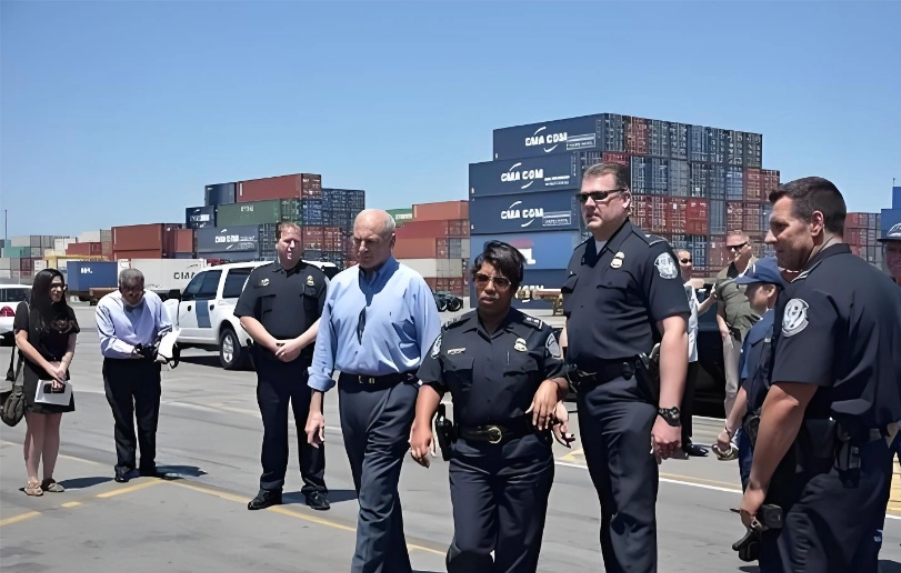
Since early 2026, U.S. Customs and Border Protection has significantly intensified 5H inspections (Entry Processing HOLD). Recent industry feedback indicates that enforcement continues to escalate, with the impact expanding beyond traditional gateway ports such as Los Angeles and Long Beach to include Oakland, Savannah, Seattle, and others.
Market observations point to a clear trend of simultaneous tightening across multiple ports, increasing the likelihood of shipment delays and, in some cases, forced re-export. As a result, both compliance requirements and overall cost pressures are rising.
I. Inspection Mechanism: Document Review at the Core
5H inspections are fundamentally enhanced document reviews, focusing on the authenticity and consistency of declared information. Key documents under scrutiny include commercial invoices, packing lists, bills of lading, contracts, importer credentials, and relevant certification files.
The review logic is straightforward:
· No discrepancies → shipment released
· Identified risks → escalated to further review or physical inspection
· Confirmed non-compliance → potential detention or re-export
In the current regulatory environment, document consistency and transactional authenticity have become decisive factors in clearance outcomes.
II. Scope Expansion: From Core Gateways to Secondary Ports
Initially concentrated at major gateways such as Los Angeles, Long Beach, and New York, 5H inspections have now extended to a broader port network, including Oakland, Savannah, Seattle, and Tacoma.
Notably, the Fast Doc Review process has become increasingly stringent at Oakland, making it a current focal point for inspections. Meanwhile, smaller ports with limited resources for complex document reviews are experiencing reduced processing efficiency, further amplifying congestion and delay risks.
III. Evolving Pattern: Secondary Triggers Increase Uncertainty
A recent development adding complexity is the re-triggering of 5H inspections after initial release status. Some shipments, despite being cleared in the system, are being pulled back into review.
This introduces significant operational uncertainty:
· Disruptions to container pickup and trucking schedules
· Increased storage and demurrage exposure
· Reduced predictability across the logistics chain
IV. Risk Concentration: Compliance Gaps Exposed
Current detention and re-export cases are largely tied to declaration and compliance deficiencies, including:
· Abnormal or inconsistent declared values
· Incorrect or mismatched HS classifications
· Non-compliant clearance practices (e.g., irregular DDP structures)
· Use of non-genuine or unqualified importers
· Inconsistencies across documentation sets
Under CBP’s data-driven risk control framework, such discrepancies are more readily identified and flagged for inspection.
V. Operational Impact: Extended Lead Times and Rising Costs
As inspection intensity and coverage increase, operational impacts are becoming more evident:
· Longer clearance cycles
· Accumulating demurrage and storage charges
· Increased instances of forced re-export
· Disruptions to inventory planning and warehouse replenishment
These challenges are particularly pronounced at secondary ports, where limited processing capacity can significantly extend dwell times once shipments enter inspection.
VI. Strategic Response: Short-Term Mitigation and Long-Term Compliance
Short-term actions:
· Optimize port selection based on current inspection trends
· Closely monitor shipment clearance status
· Build additional lead-time buffers into logistics planning
Long-term priorities:
· Ensure accurate and transparent declarations(detailed product descriptions, reasonable valuation, correct HS codes)
· Maintain complete and consistent documentation
· Prepare required certifications in advance (e.g., FCC, CPSC, FDA)
· Establish compliant and verifiable importer entities
· Build a stable and reliable customs clearance framework
In the event of inspection, timely coordination with brokers and logistics providers is critical to minimizing disruption and cost exposure.
Conclusion
U.S. import enforcement is clearly evolving toward a data-driven, high-intensity regulatory model. In this environment, clearance outcomes increasingly depend on compliance capability and supply chain integrity, rather than cost considerations alone.
Through rigorous process management, TPL have consistently minimized customs examination risk across our operations, ensuring stable and compliant cargo movement.
Feel free to contact us for tailored logistics solutions.